

The Artistry of Japanese Incense
What makes Japanese incense so special?
Japanese incense is more than simply a pleasant fragrance. It represents centuries of cultural refinement, craftsmanship, and artistic tradition carefully preserved across generations.
For more than 1,500 years, incense has played an important role in Japanese culture, evolving from sacred temple rituals into a refined cultural art.

The Arrival of Incense in Japan

Incense first arrived in Japan over 1,500 years ago alongside the introduction of Buddhism.
Fragrant woods such as agarwood and sandalwood were burned in temples during religious ceremonies. These rare materials were considered sacred, believed to purify spaces and connect the human world with the divine.
At the time, incense was extremely precious and reserved mainly for religious use and the imperial court. Records from early chronicles even describe pieces of fragrant wood washing ashore, treasured as gifts from nature.
Over time, the appreciation of fragrance gradually spread beyond temples, laying the foundation for Japan’s unique incense culture.
Heian Period (794 – 1185)
Fragrance Among the Aristocracy

During the Heian period (794 - 1185), incense became popular among aristocrats.
Fragrance was not merely enjoyed—it became an essential part of refined court culture. Nobles would scent their robes, rooms, and even letters, creating a subtle and personal expression of elegance.
One of the most famous forms of incense was nerikō, a kneaded incense made from sandalwood, herbs, and spices. Carefully aged and blended, nerikō produced soft, layered fragrances that evolved over time.
Incense was also deeply connected to literature and aesthetics. In works such as The Tale of Genji, fragrance is used to reflect personality, emotion, and seasonal beauty, showing how scent became a language of its own among the aristocracy.
Muromachi Period (1336 – 1573) – The Birth of Kōdō

During the Muromachi period (1336 - 1573), incense culture developed into Kōdō, known as the Way of Incense.
Influenced by Zen philosophy, Kōdō elevated incense appreciation into a disciplined art form alongside the tea ceremony and flower arrangement.
In Kōdō, participants do not simply smell incense — they “listen” to it. This expression reflects a mindful approach, where one quietly observes the subtle character of the fragrance and connects with it on a deeper level.
Formal schools such as Oie-ryū and Shino-ryū established structured practices, including incense-comparing games (kumiko) and poetic interpretations of scent. Through these traditions, incense became a medium for meditation, cultural expression, and refined sensitivity.
Edo Period (1603 – 1868) – Incense in Everyday Life

During the Edo period (1603 - 1868), incense became widely available to the public.
Advances in craftsmanship and distribution allowed fragrance to move beyond the aristocracy and into the daily lives of townspeople.
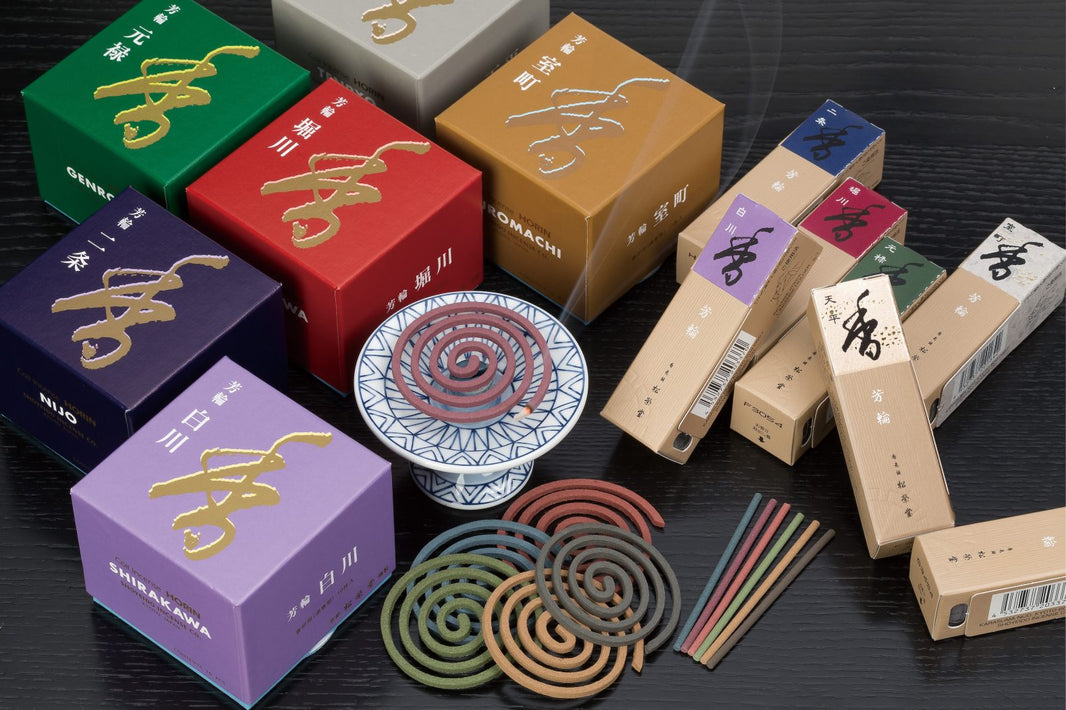
Incense sticks known as senkō became the most common form of incense used in Japan. Unlike earlier forms, senkō required no charcoal, making it simple and accessible for everyday use.
People enjoyed incense in many ways—burning it for relaxation, using it to scent clothing and rooms, or offering it in Buddhist altars at home. Incense also became part of seasonal customs and gift-giving culture, reflecting the growing appreciation of fragrance in ordinary life.
Browse Japanese Incense Sticks
Japanese Incense Today
Today, Japanese incense continues to blend tradition with modern lifestyles.
Many historic incense makers in Japan still follow centuries-old techniques, carefully blending natural ingredients such as sandalwood and agarwood to create refined and elegant fragrances. These methods are often passed down through generations, preserving both craftsmanship and philosophy.
At the same time, contemporary incense has evolved to suit modern living—featuring softer scents, less smoke, and designs that complement interior spaces.
In everyday life, Japanese incense is often enjoyed for relaxation, meditation, and quiet moments at home. Whether used as part of a mindfulness routine or simply to create a calming atmosphere, it offers a gentle way to reconnect with oneself in a busy world.
Experience the Artistry of Japanese Incense

Explore authentic Japanese incense from respected makers.


